Backyard Surveillance
Shreveport, Louisiana, 2021
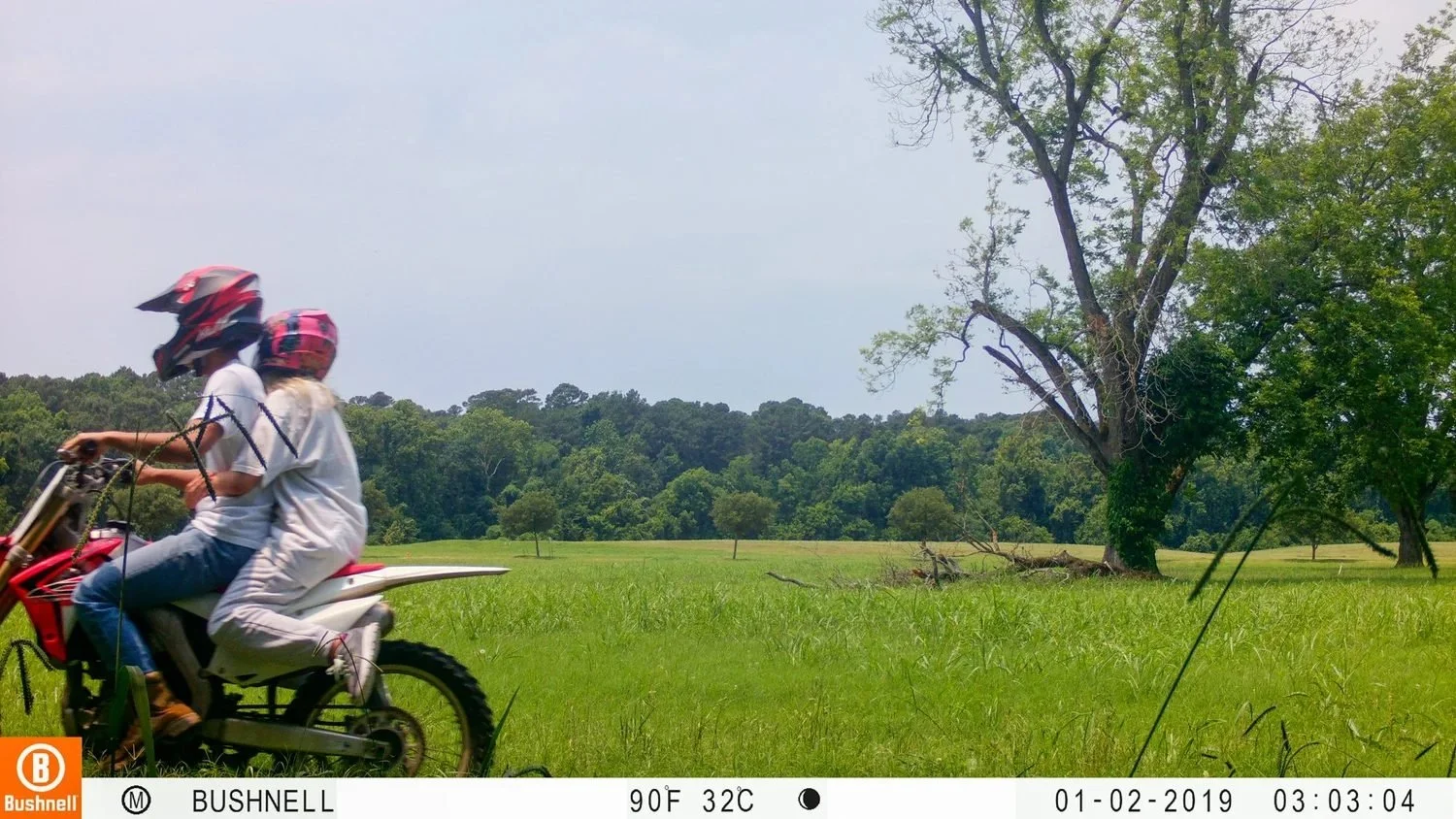
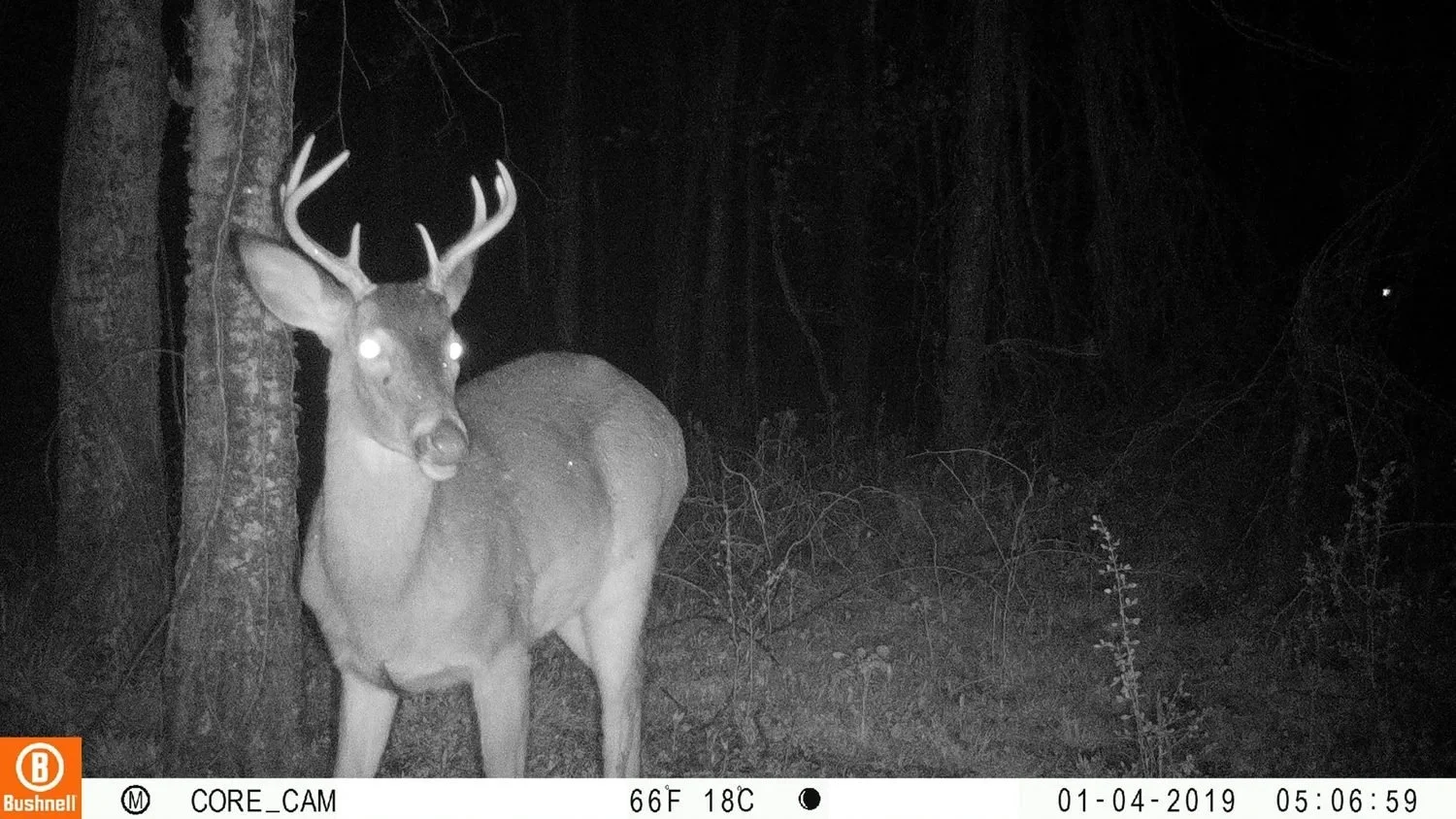
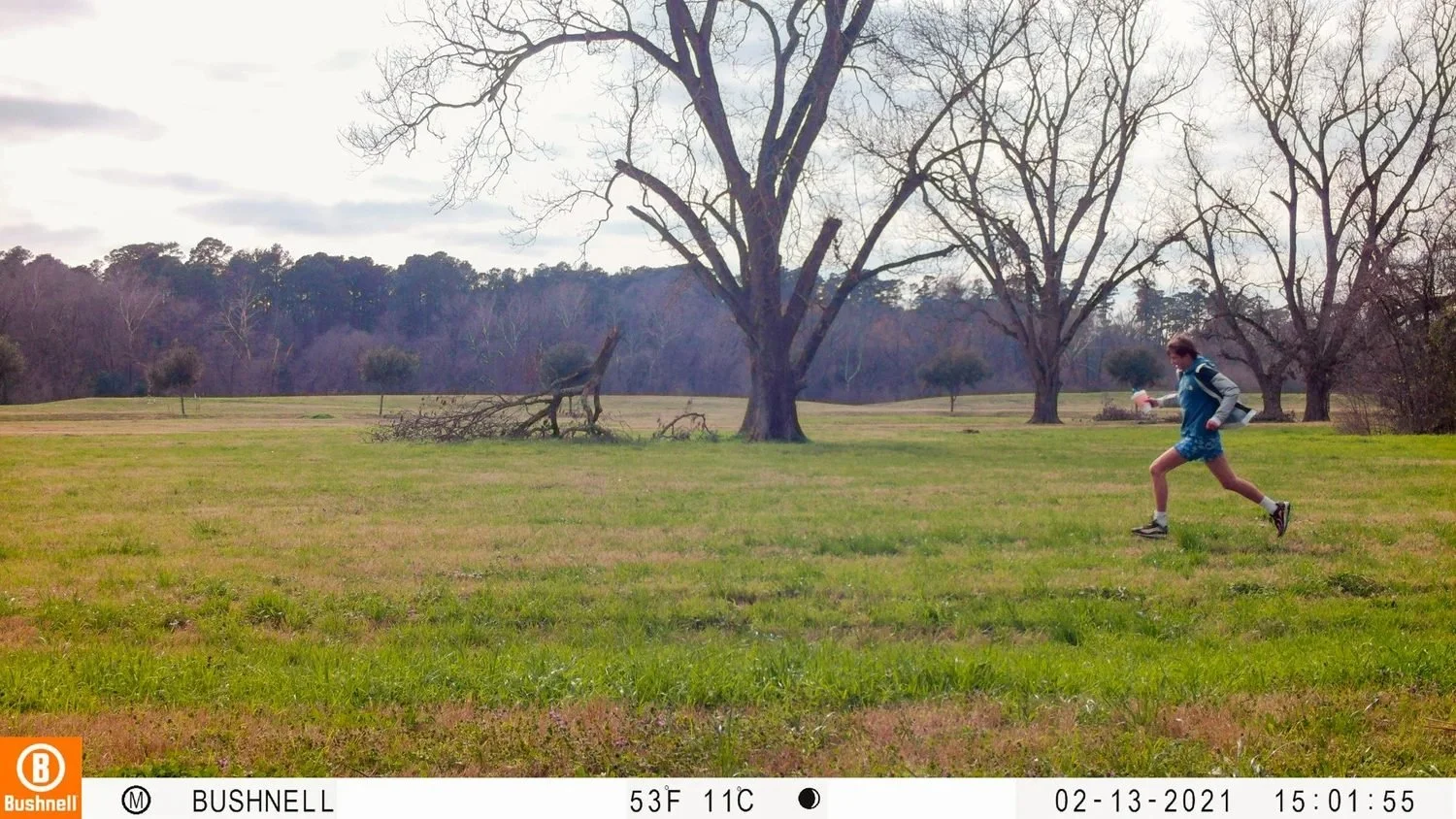
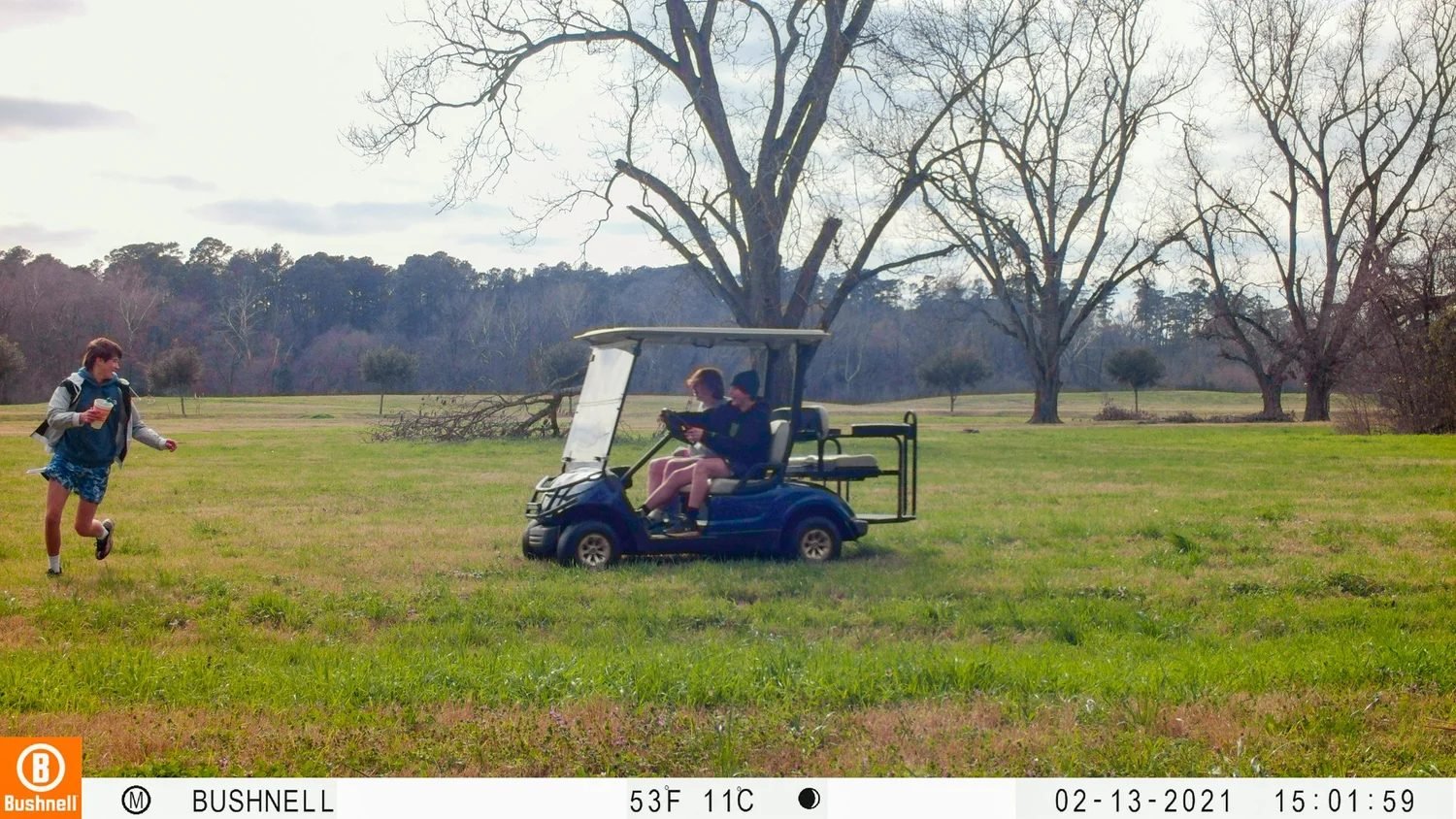
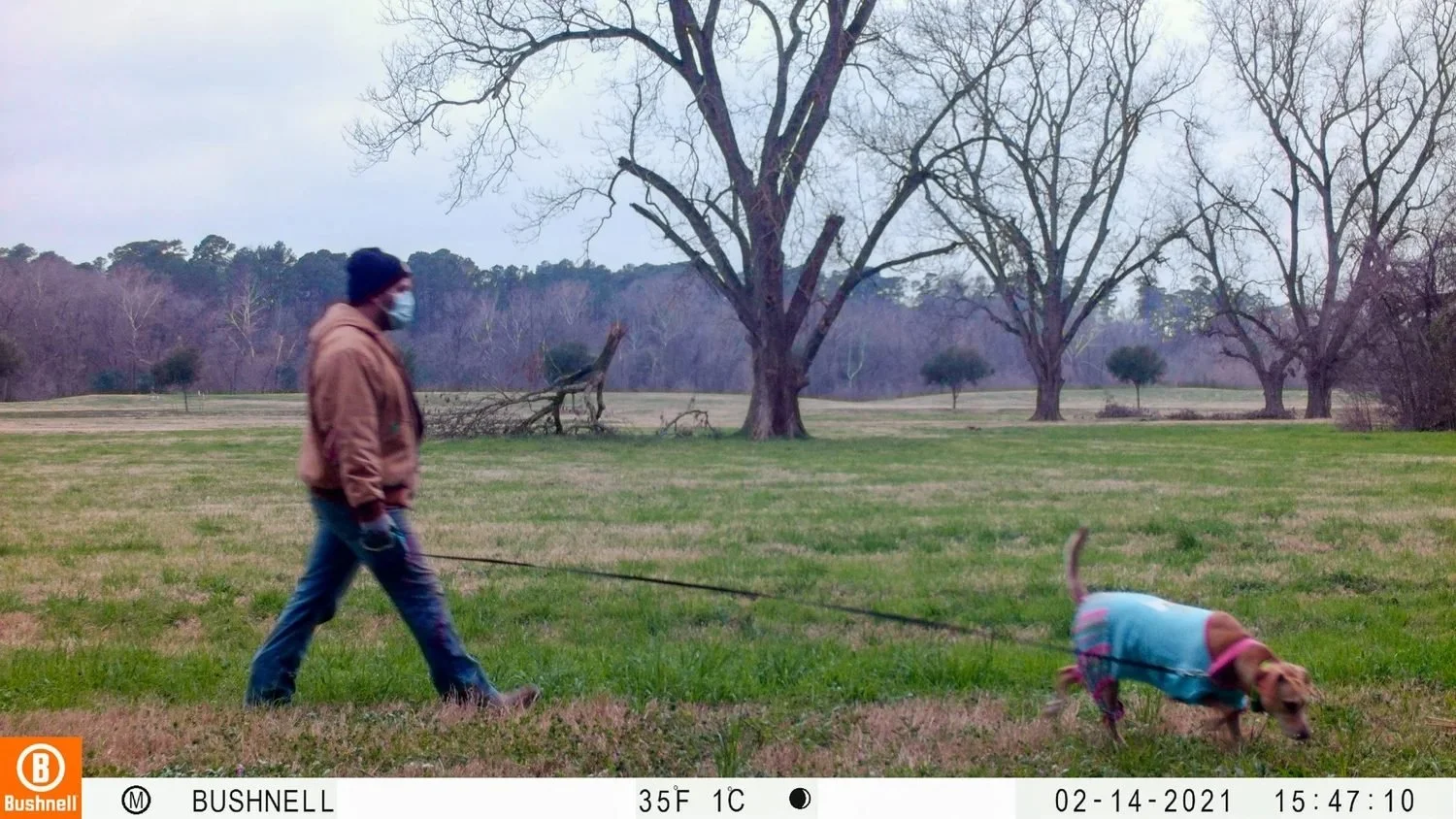
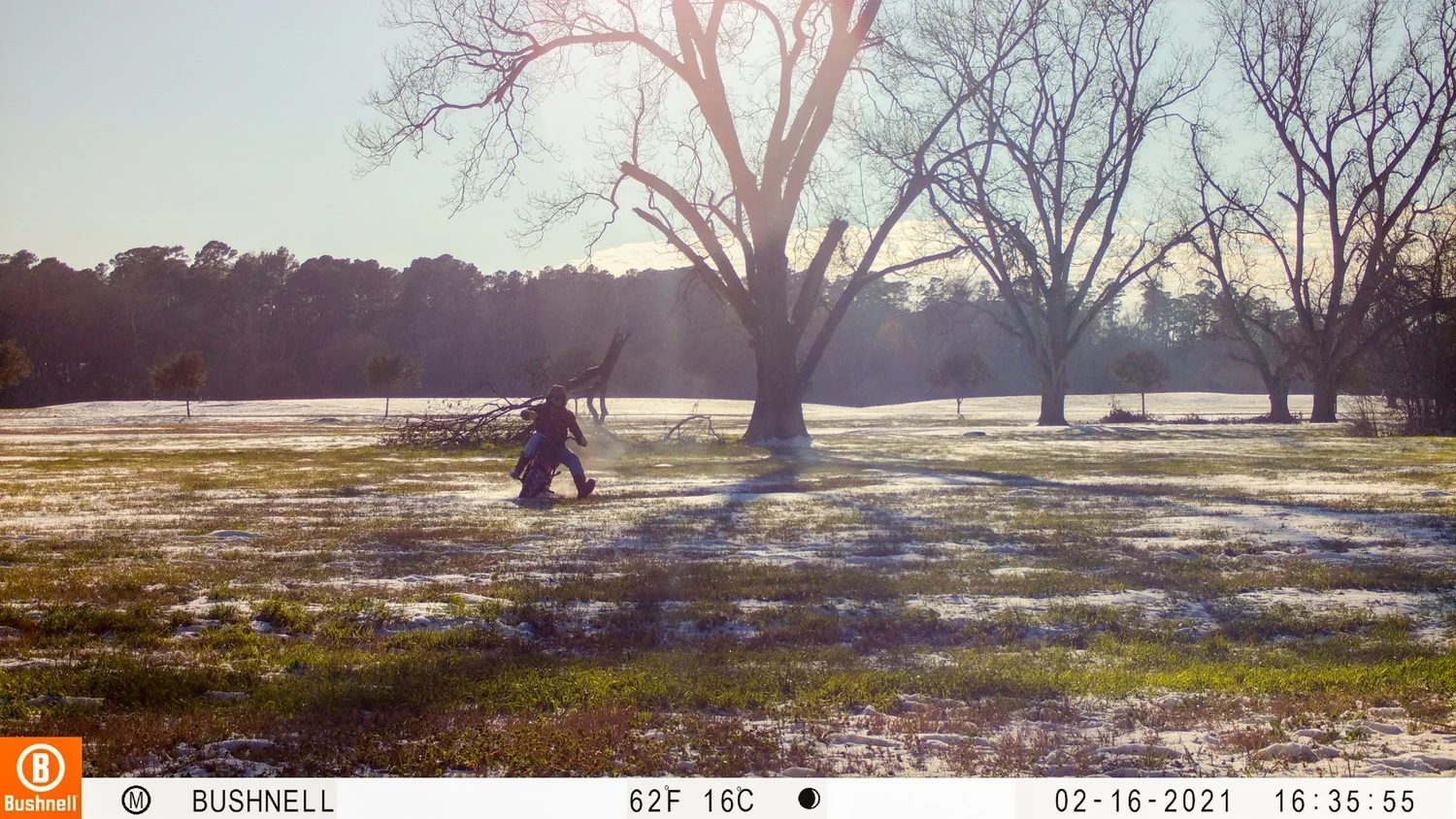
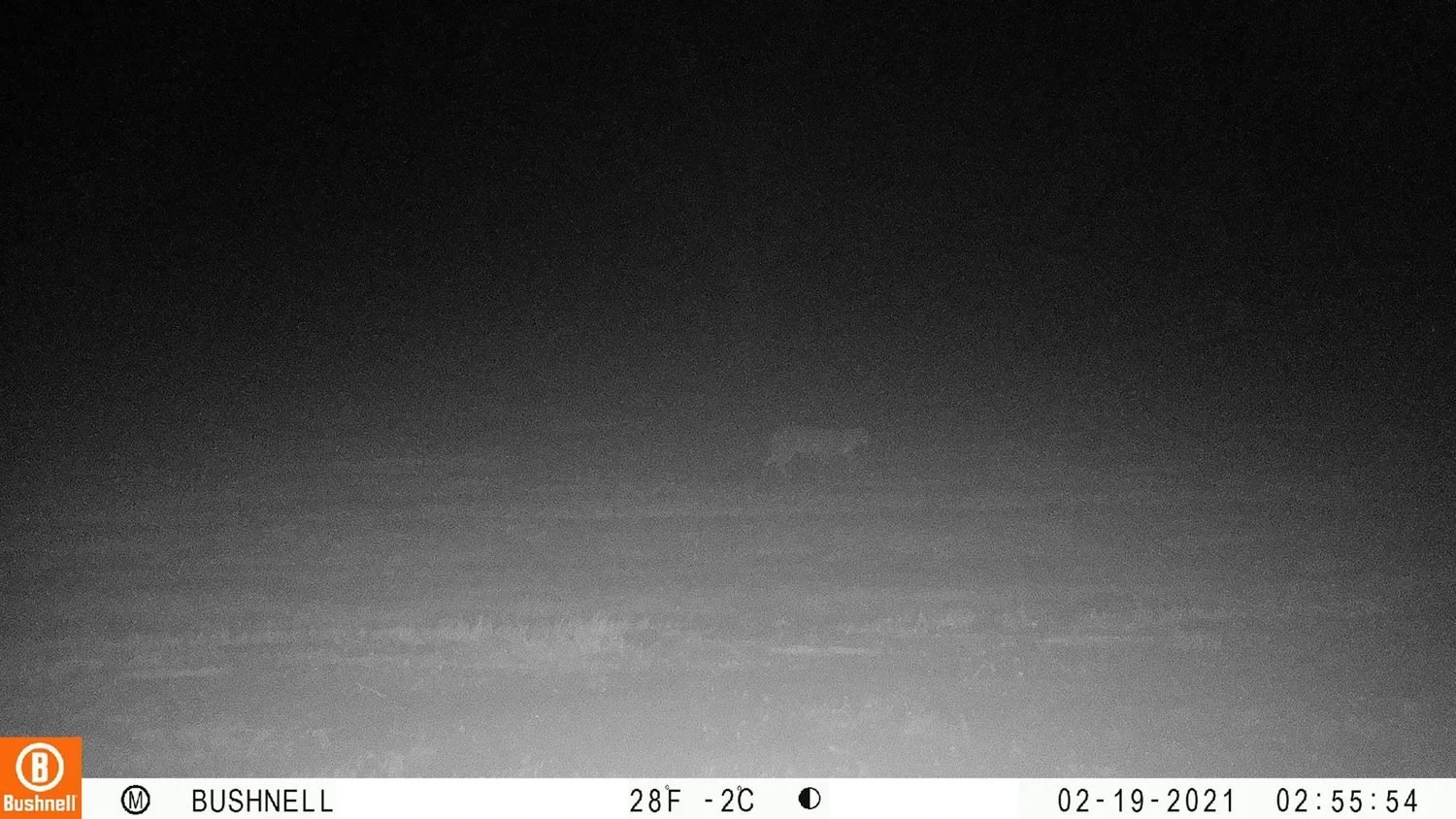
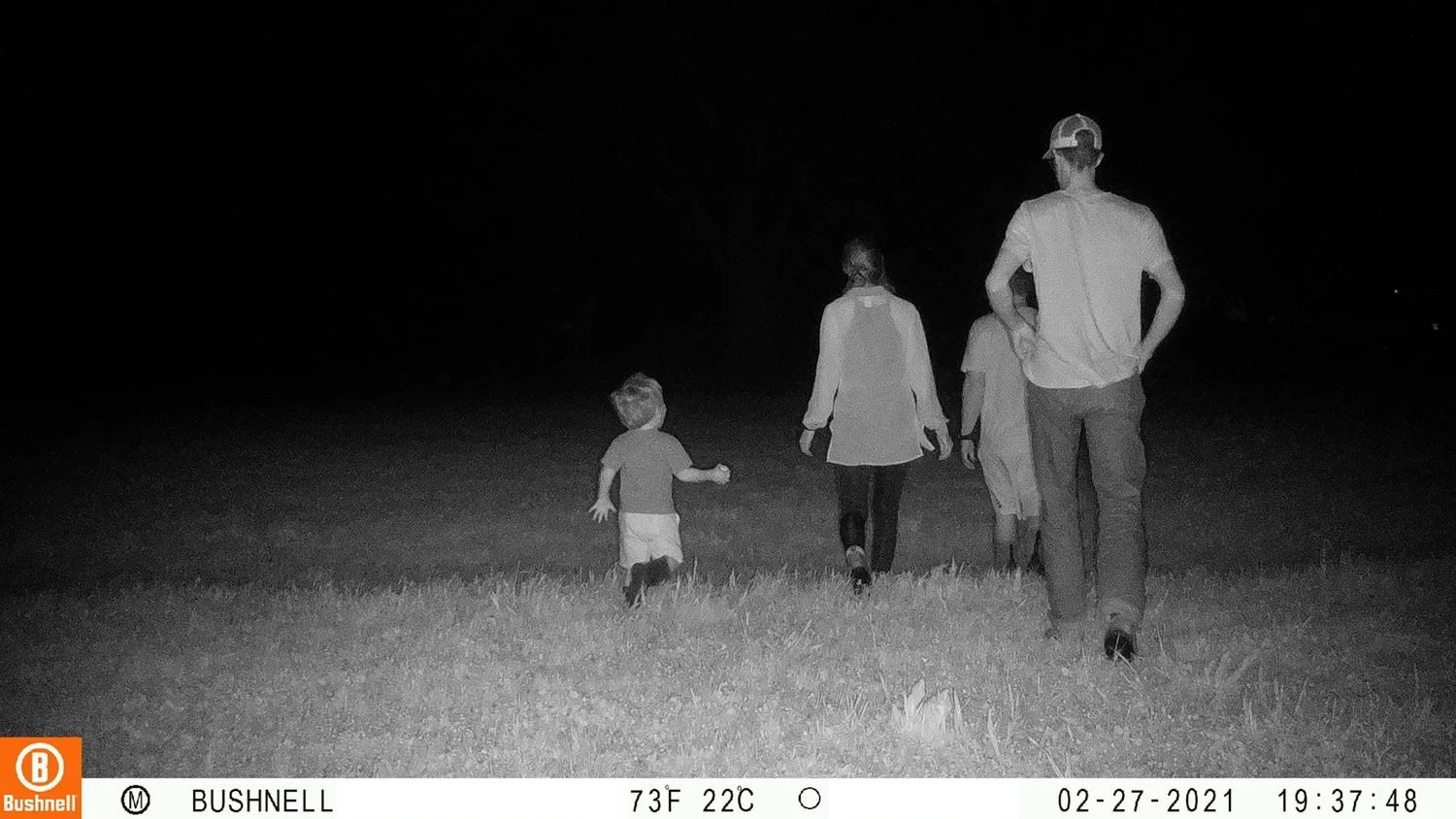
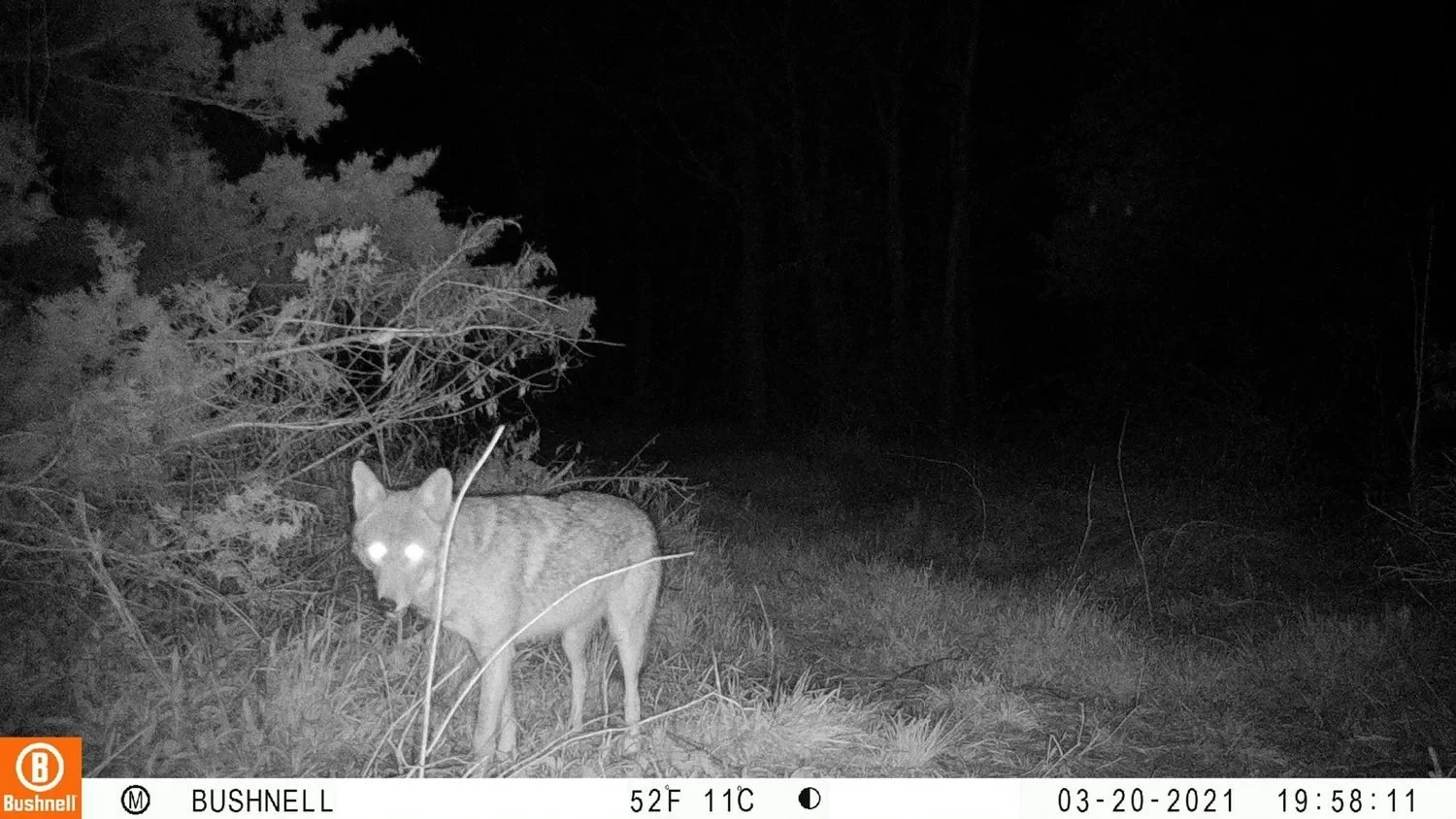
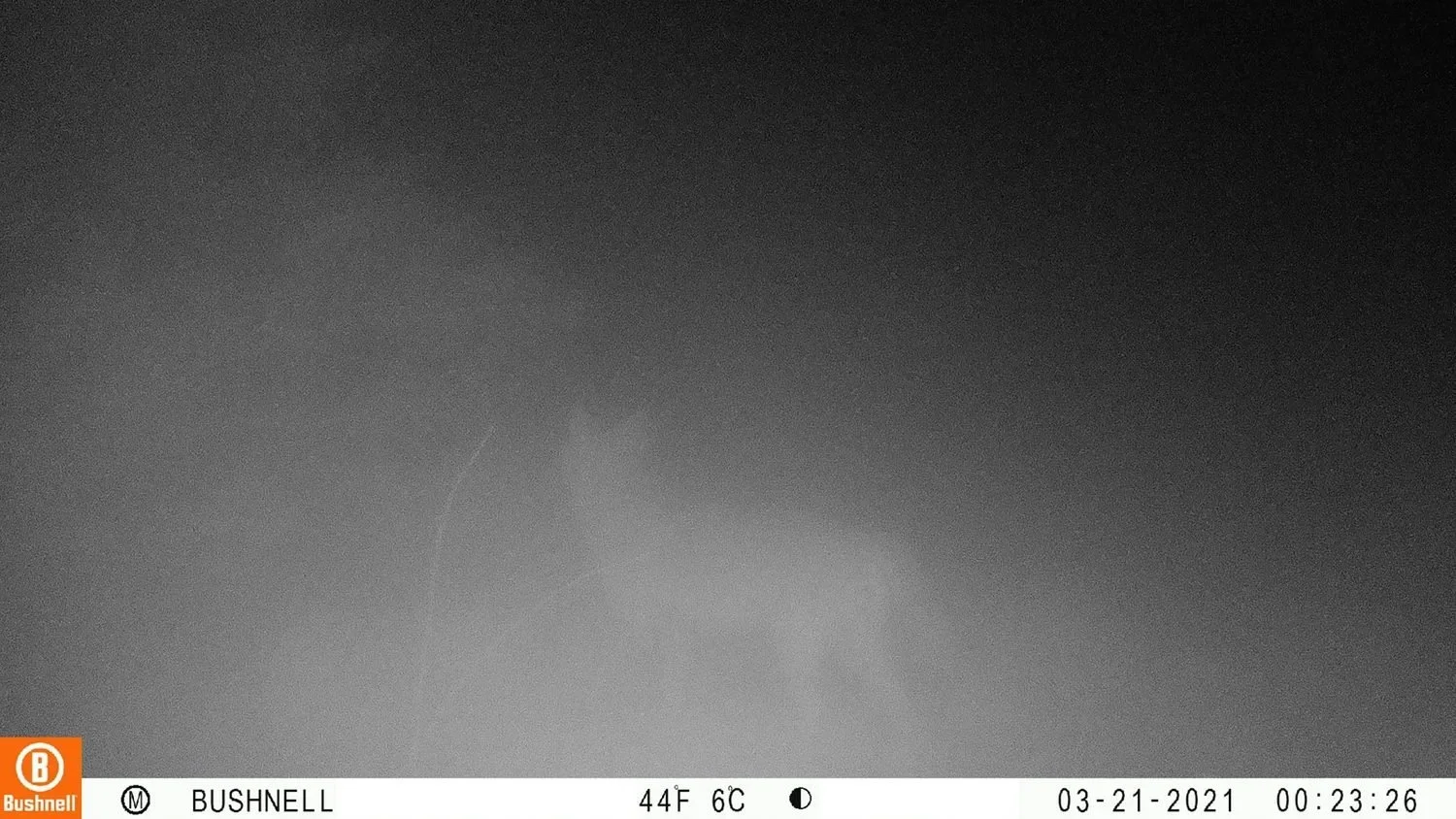
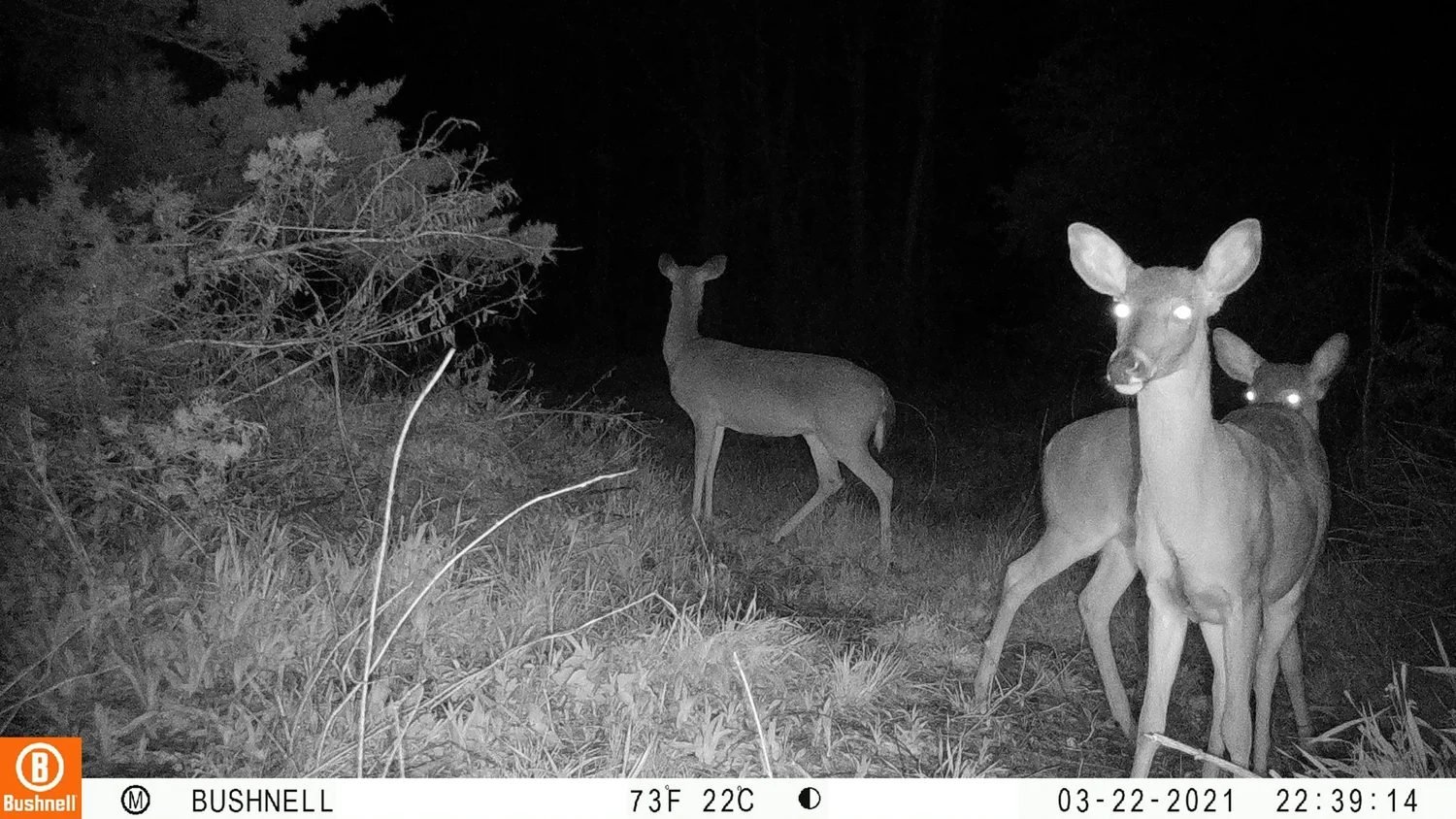
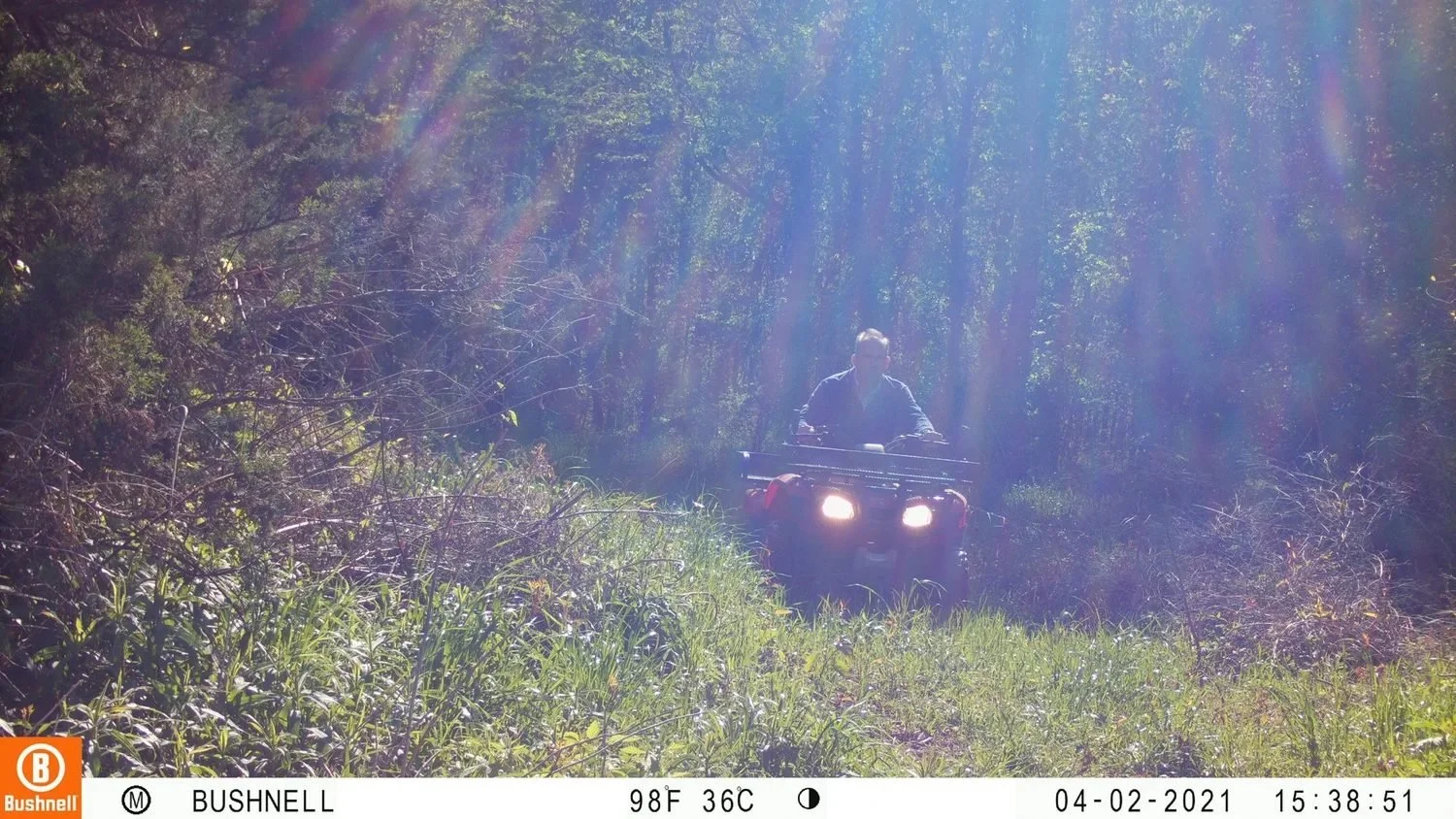
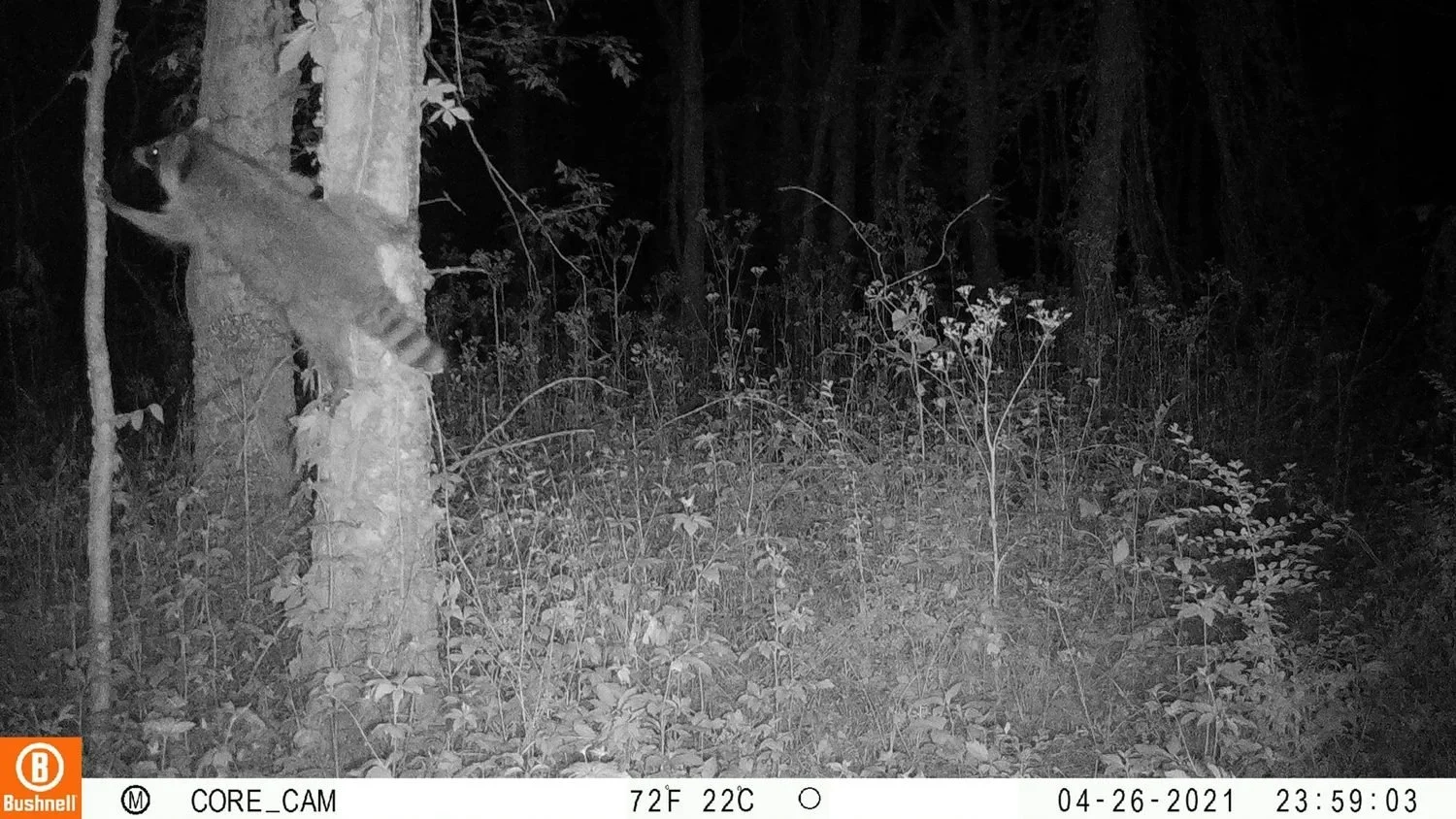
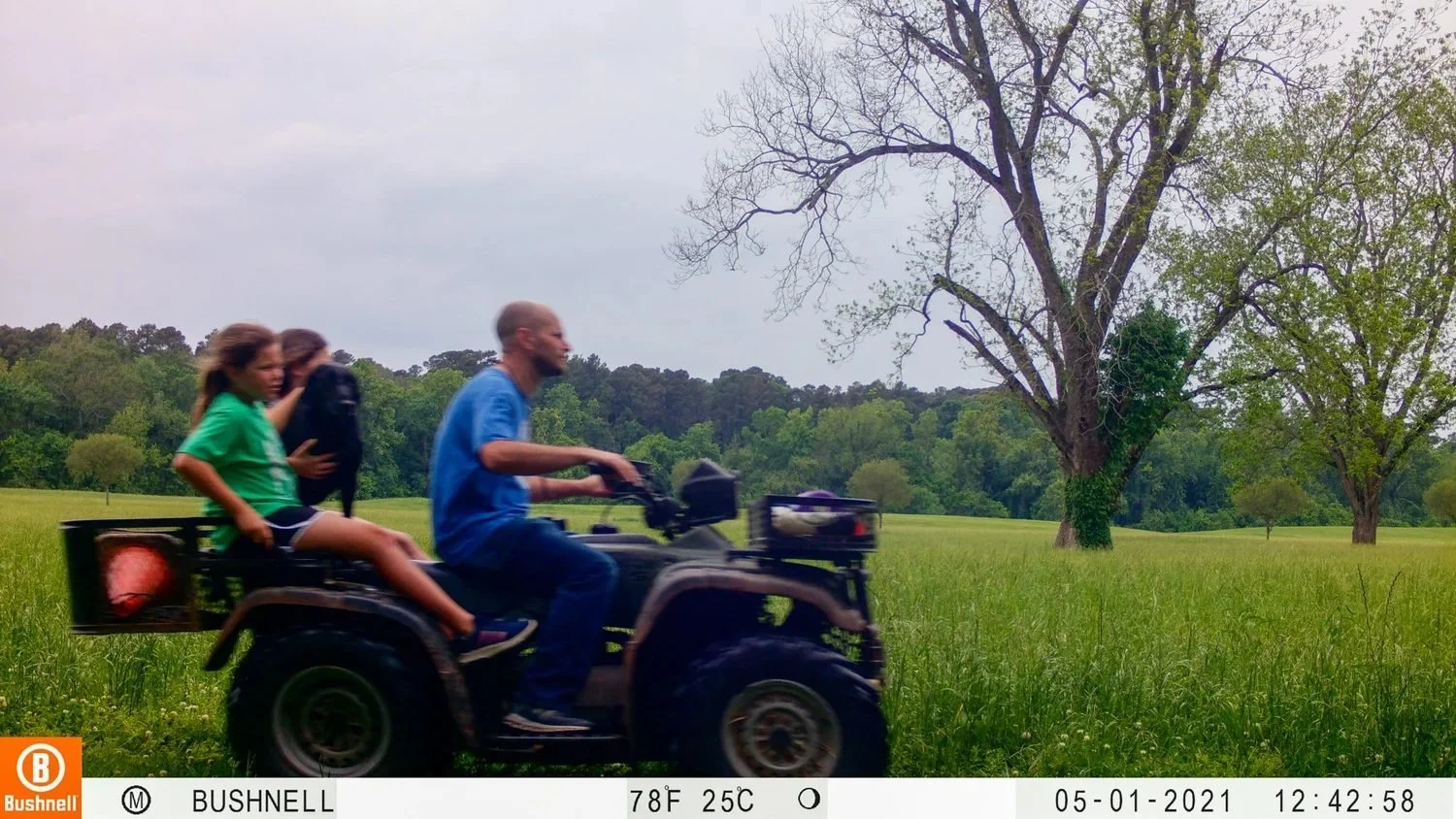
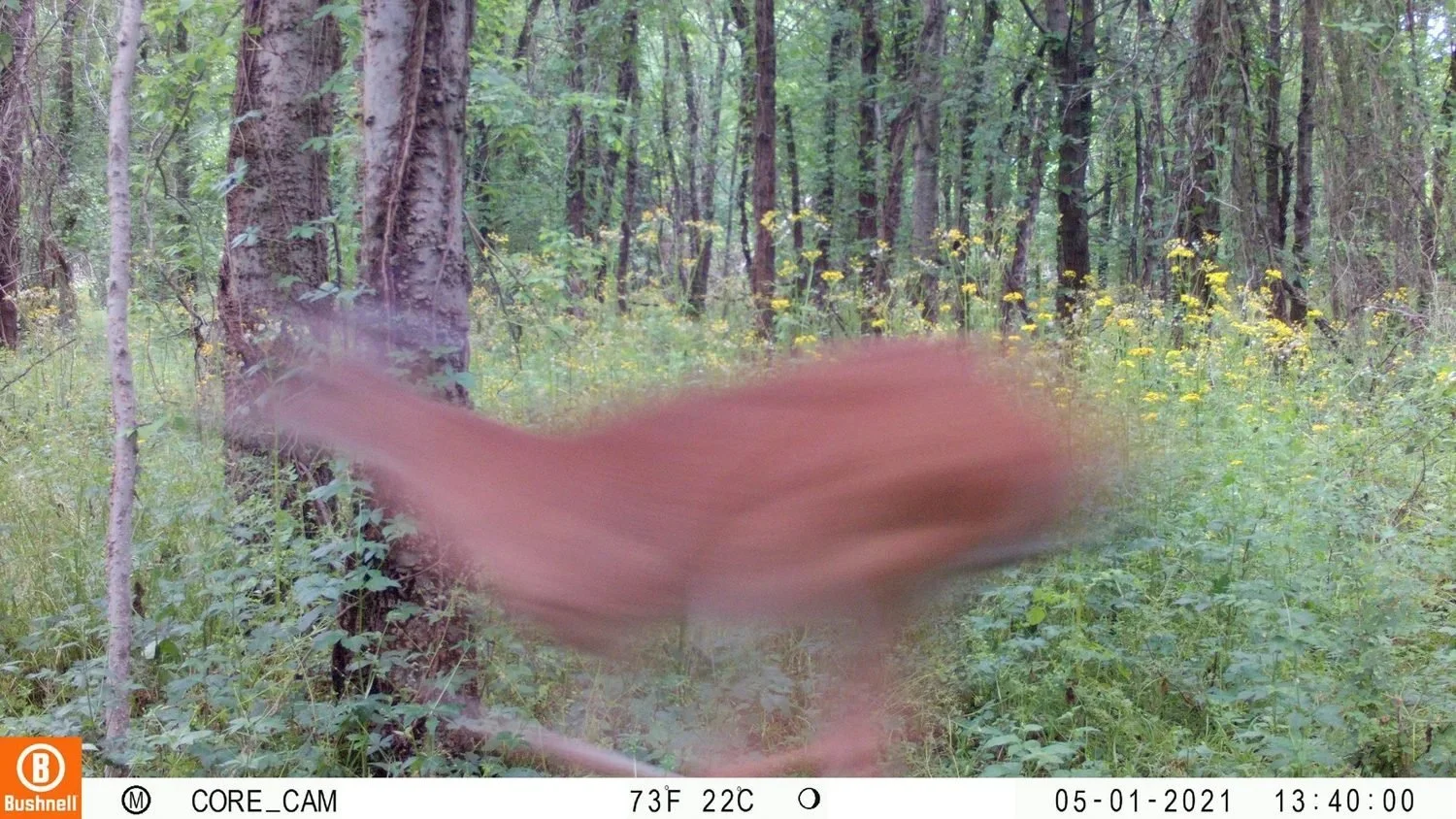
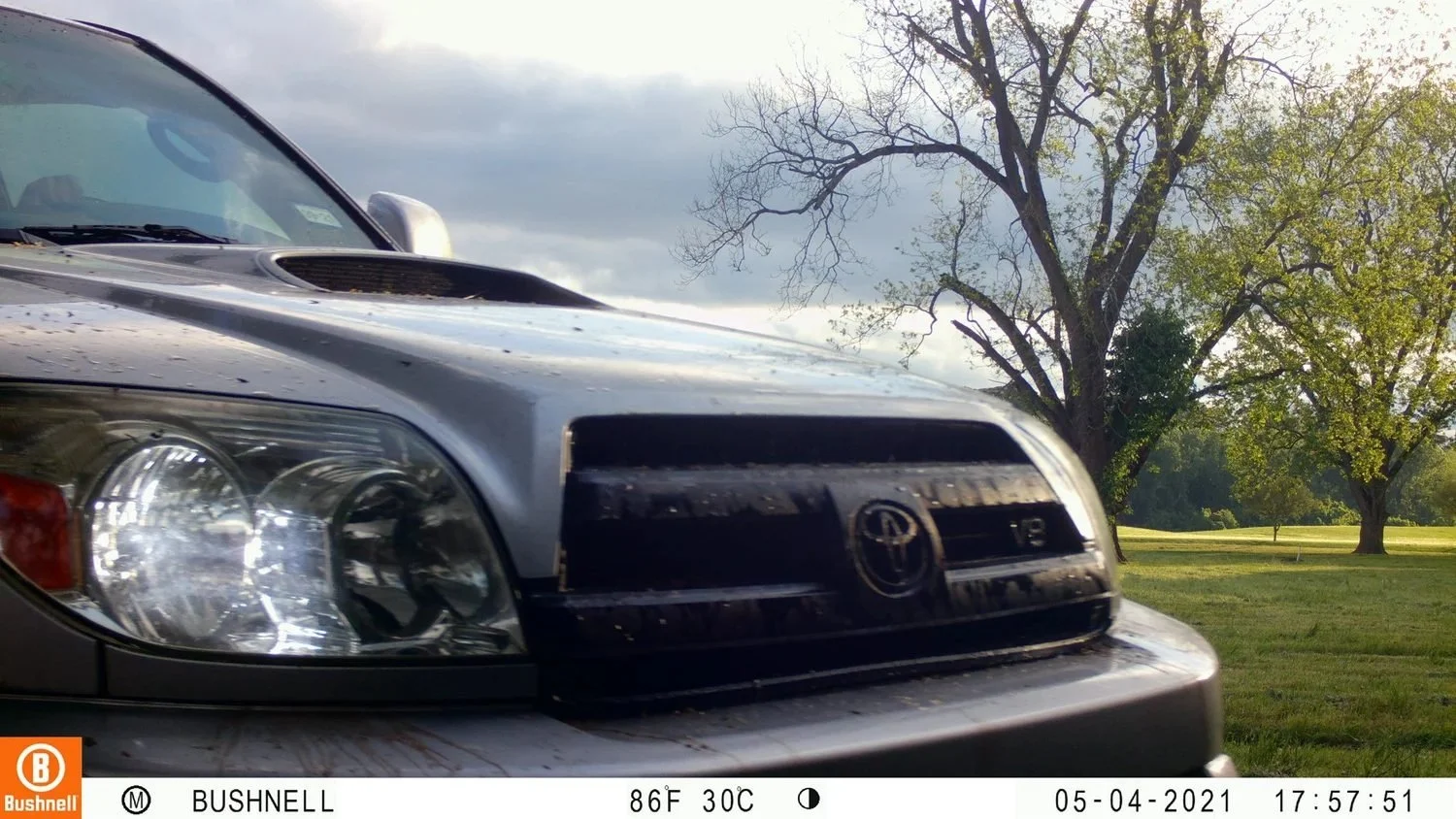
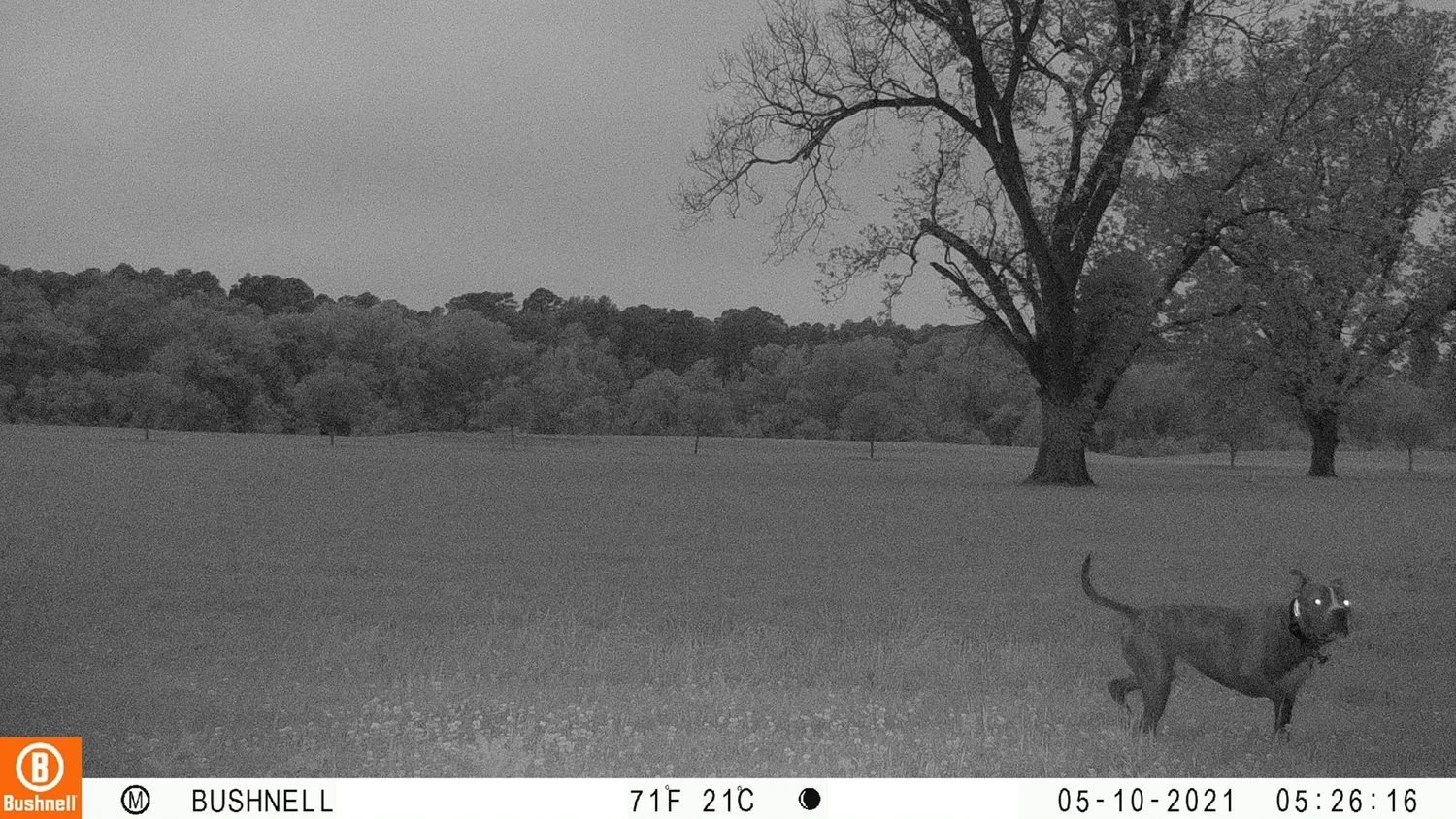
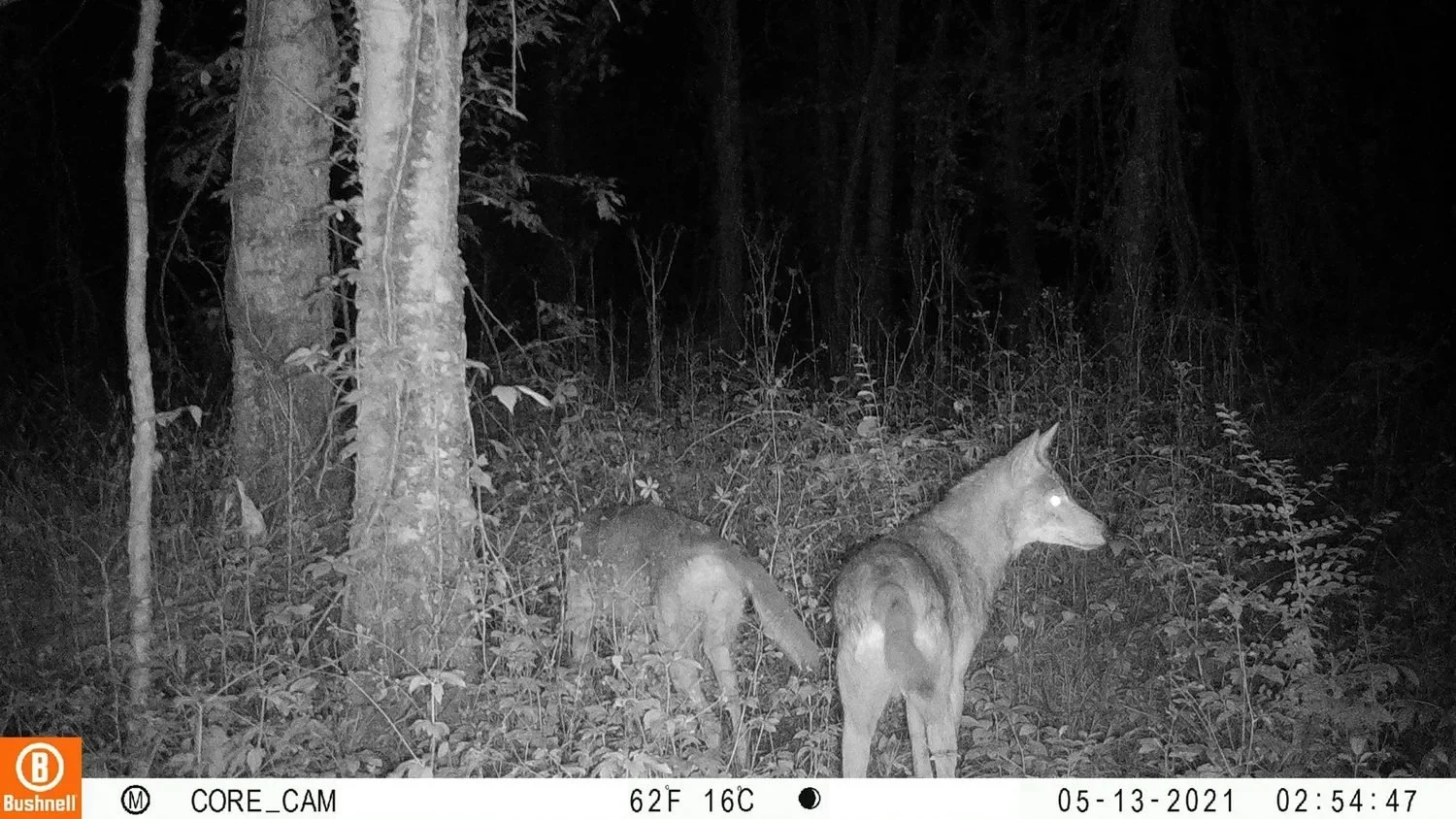
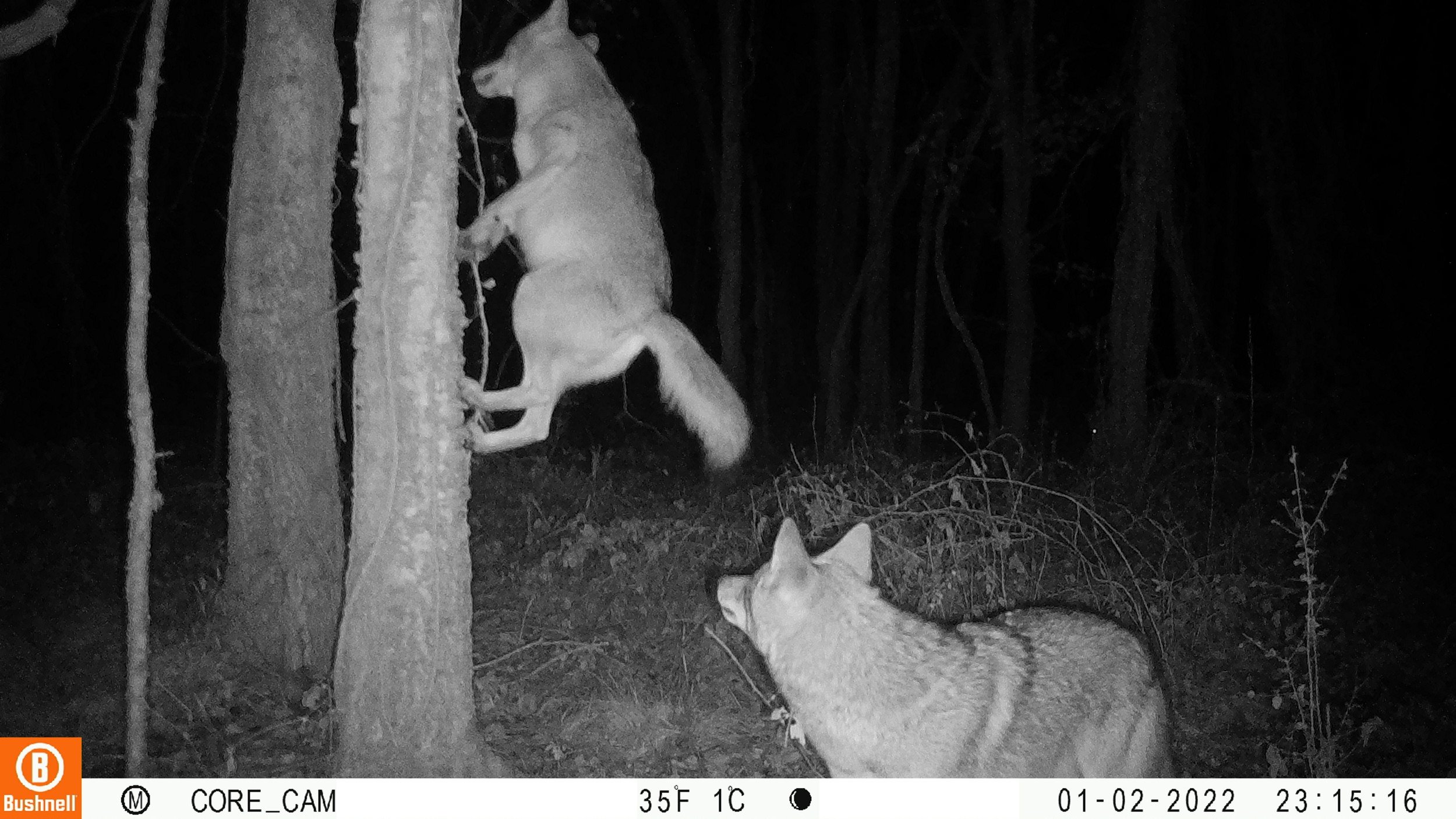
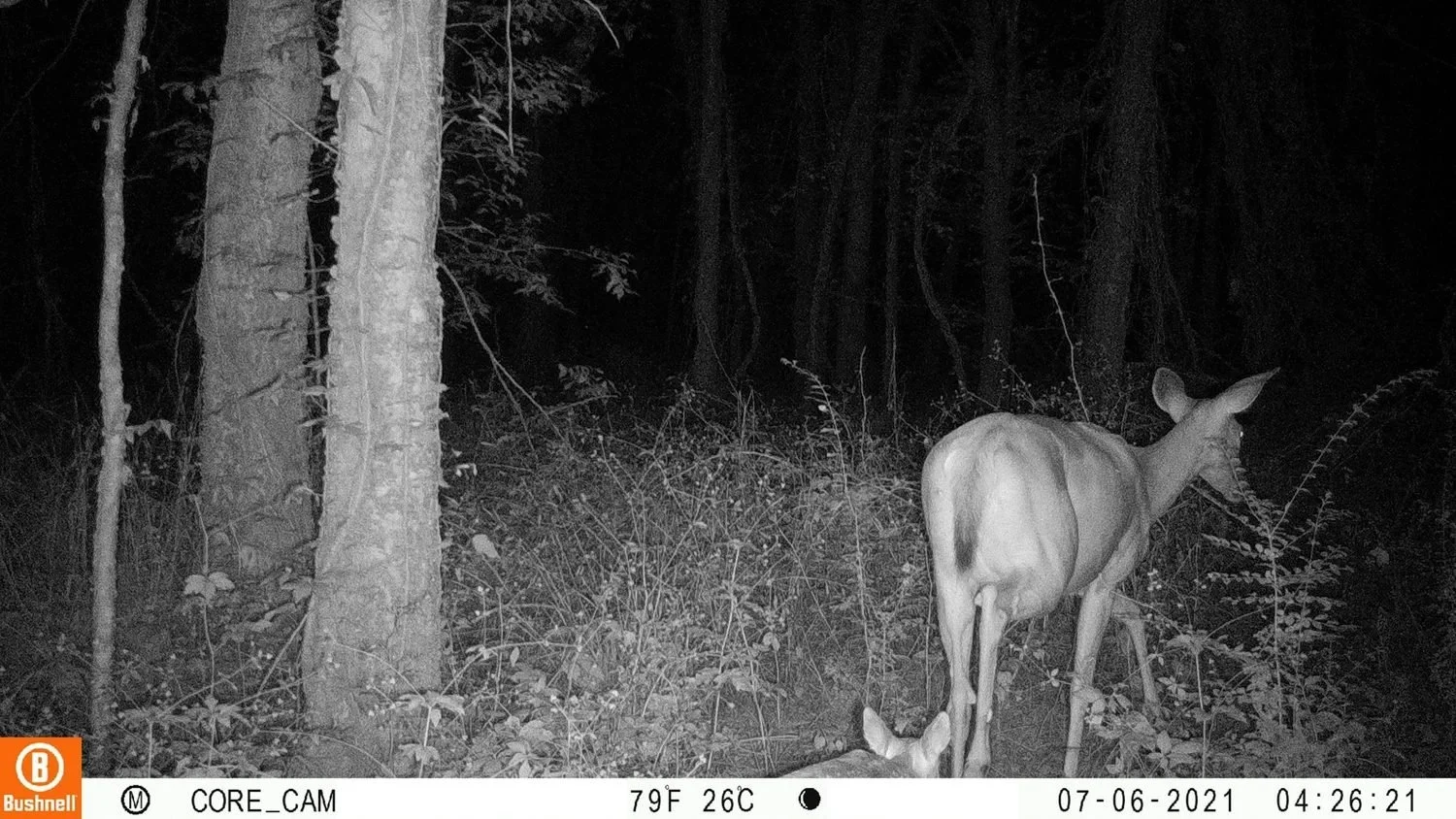
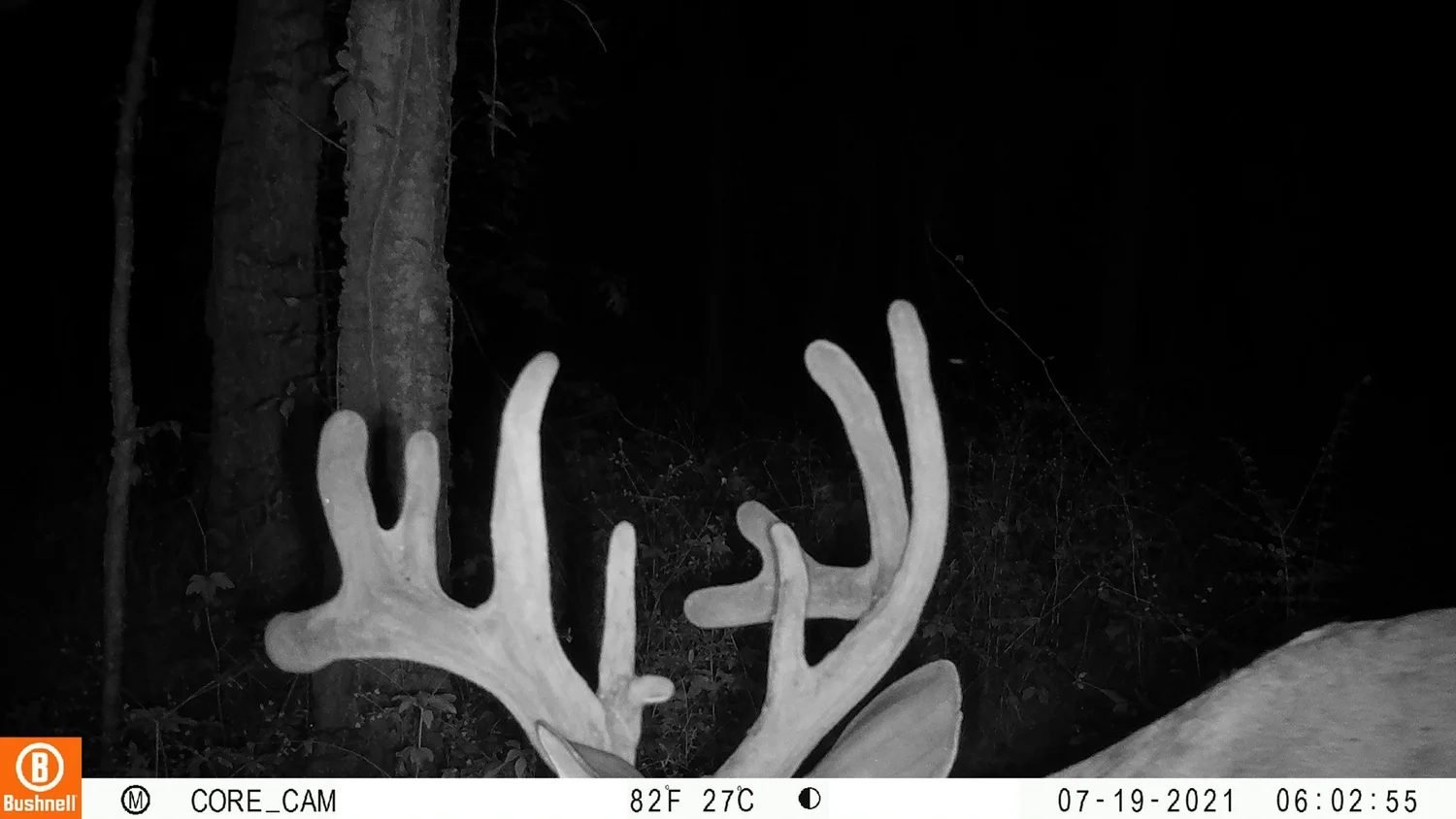
In 2021 I strapped two motion-triggered trail cameras to trees in the field behind my neighborhood in Shreveport where I lived at the time. One faced the open field. The other watched a path into the woods. I put them up to gather information, to make sense of the world I was living in.
I grew up on a small farm in Kansas, playing in the creek, shooting BB guns, and keeping track of a potbelly pig that used to run with a pack of stray dogs, along with a donkey I named Runner and a quarter horse named Shade. My mom was a rural route school bus driver, and every morning I rode with her, watching the sun rise and spill across the soybeans. Staring out the open window helped with motion sickness. It wasn’t until I was much older that I realized how those bus rides drove my curiosity toward making photographs.
From February to July the cameras gave everything the same attention: kids on four-wheelers, dog walkers, a family crossing the field after dark, coyotes, a raccoon halfway up a tree, deer at night. Every frame carries the camera’s data strip: temperature, moon phase, date, and time. I didn’t press the shutter. I chose where the cameras went and looked at what came back. I was excited by the unknown each time I loaded a card onto the computer. The project ended when a card that held something I did not expect was destroyed, and I never put the cameras back up.
Backyard Surveillance began with two trail cameras and a wish to understand the field behind my neighborhood. The cameras recorded people and animals without distinguishing between them. Looking through the pictures, I became interested in the difference between setting up a system to watch and knowing what that system will show me. The frames borrow the look of security footage, with the data strip and the automatic shutter, but they also record my own curiosity about what the cameras noticed when I wasn’t there. The data strip gives the temperature, moon phase, date, and time, but not who or what crossed the field. Charlotte Cotton has written about how surveillance pictures raise questions about who made a photograph and whether it tells the truth. Doug Rickard made his series A New American Picture from Google Street View images of American places, choosing frames instead of pressing a shutter.
This project is different from my portrait-based work about Mormon life. Like Rickard, I did not stand behind the camera for these exposures. My choices were where to put it, what to keep, and how to bring the pictures together. I have hundreds of these frames to sift through and mine.